Summer is supposed to feel free.
Windows down. Late-night drives. Beach trips. Coffee runs. Music too loud. Group chats asking, “Who’s driving?”
For teens, summer means independence. More time with friends. More places to go. More moments that become core memories.
But behind the scenes, there’s another reality most people don’t talk about.
The 100 days between Memorial Day and Labor Day are nationally known as the “100 Deadliest Days” for teen drivers — the time of year when fatal crashes involving teens spike dramatically. Organizations like the 100 Safest Days of Summer Coalition, including groups such as The National Road Safety Foundation, Impact Teen Drivers, SADD, and We Save Lives, are working together to change that narrative.
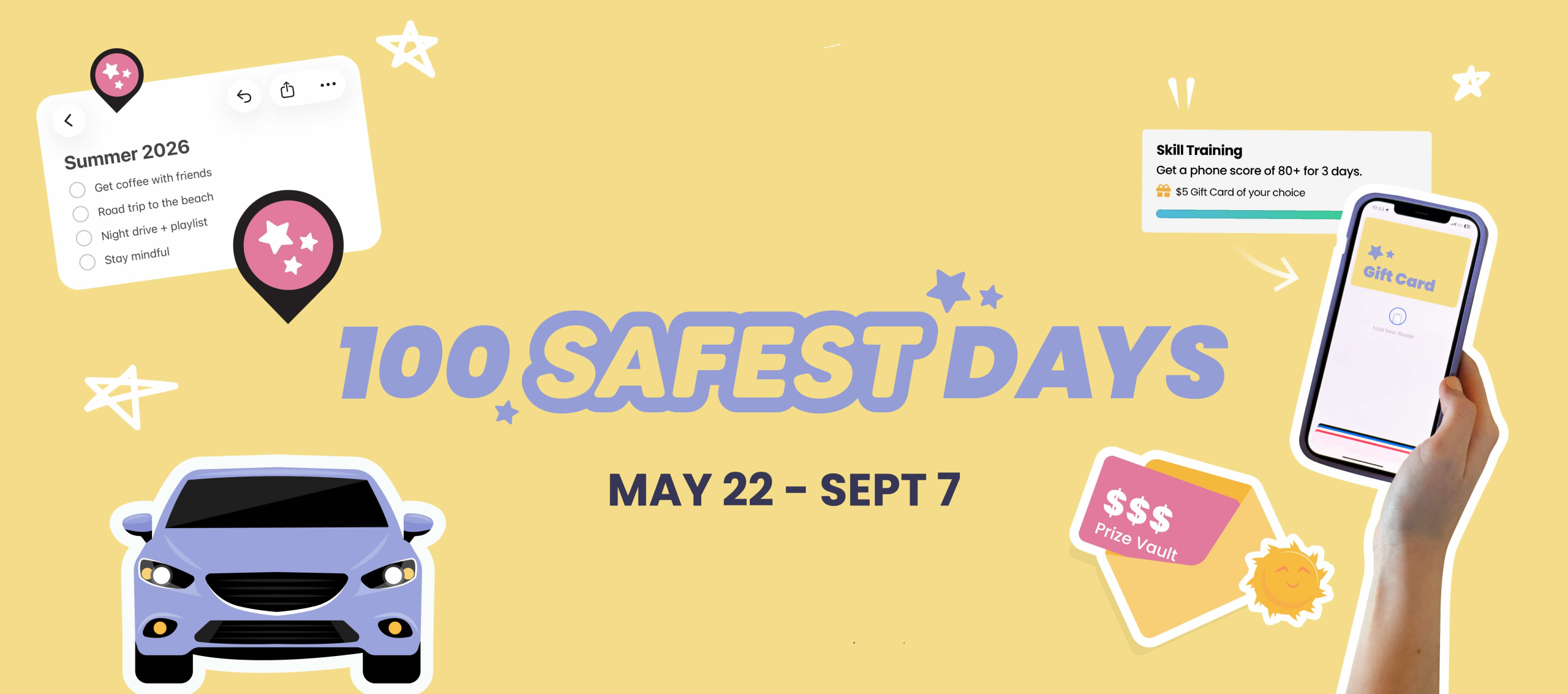
That’s the “why” behind the 100 Safest Days campaign.
But here’s the important part:
This campaign was never meant to be another fear-based PSA.
Teens Already Know Driving Can Be Dangerous
Most teens have seen the school assemblies. The wrecked-car displays. The dramatic commercials. The statistics.
And while those campaigns come from a real place, they often miss something important:
Young drivers don’t connect with being constantly talked at.
Nobody wants summer to feel like a warning label.
So instead of building a campaign around guilt or scare tactics, the 100 Safest Days movement is built around something different:
Community. Competition. Habits. Challenges. Momentum.
The goal isn’t to shame teens into driving safely.
The goal is to make safe driving feel normal, social, rewarding, and actually worth participating in.
The Reality Behind the “100 Deadliest Days”
There’s a reason crash rates rise during summer.
Teens are driving more often, staying out later, traveling with friends, and spending more time on unfamiliar roads. Combined with inexperience, distractions, speeding, fatigue, and phone use, the risks increase significantly.
Here are some of the facts:
- Teen drivers ages 16–19 face higher crash risks than any other age group.
- Car crashes remain a leading cause of death for young people.
- Many serious teen crashes involve distraction, speeding, or failure to recognize hazards.
But the most important part of the story is this: these crashes are preventable.
That’s why the campaign exists.
Not to make teens afraid of driving, but to help create a culture where safer choices become part of everyday life.
Why Safe Roads Challenge Takes a “Summer Challenge” Approach
When we built our version of the 100 Safest Days campaign, we asked a simple question:
What if safe driving felt more like a game than a lecture?
That’s why our campaign focuses on:
- In-app challenges
- Safe driving streaks
- Rewards from over 350+ of your favorite brands
- Team energy
- Social competition
- and real-world prizes.
Instead of saying “don’t do this”, we’d rather say: “here’s something worth showing up for.”
Safe driving should feel empowering.
Every safe trip logged. Every distraction avoided. Every good decision repeated. Those things add up over an entire summer.
And when thousands of young drivers participate together, culture starts to shift.
This Isn’t Just About Drivers
One of the most important ideas behind the broader 100 Safest Days movement is shared responsibility.
Passengers matter too.
Friends matter.
Parents matter.
The person handing someone the aux cord matters.
The friend telling someone to put their phone down matters.
Road safety culture is built socially, the same way risky driving habits are.
That’s why this campaign isn’t about “perfect drivers.” It’s about creating better habits, better awareness, and better choices over time.
The Goal
The phrase “100 Deadliest Days” has existed for years.
We’re trying to help rewrite it.
The mission behind 100 Safest Days isn’t to make teens scared to drive.
It’s to prove that safe driving culture can still feel fun, social, competitive, rewarding, and real.
And if enough people buy into that idea, maybe someday these 100 days won’t be known as the deadliest anymore.
Maybe they’ll actually become the safest.